







Treviso is not a city that makes an immediate impression. It does not carry the weight of Venice or the excess of Verona. It is a city on a human scale, dense with history and everyday life, that reveals itself as you walk along its canals, sit at the market tables, or stop in front of a frescoed apse hidden in an alley. A weekend is just the right amount of time to understand it, without rushing, without ticking boxes. 1
This guide is for anyone who wants to plan two days in Treviso in a practical way: what to see, where to spend your time, and how to move between the old town and its surroundings.
The old town and the Cathedral
The natural starting point is Piazza dei Signori, the civic heart of Treviso. The square is flanked by the Palazzo dei Trecento, with its medieval loggia open onto the market, and the Torre Civica, which has been marking the hours for centuries. It is worth climbing the tower for a full view of the rooftops and the city walls.
From Piazza dei Signori you take Calmaggiore, the main street of Treviso: an arcaded road linking the square to the Cathedral, lined with historic shops, cafés and frescoed porticoes. This is where you will find Pasticceria Nascimben, open since 1865, one of the longest running businesses in the city. A stop for a brioche or a coffee is the best way to start the morning the way locals do.
The Cathedral of Treviso, formally the Cattedrale di San Pietro Apostolo, is a building layered with centuries, featuring a neoclassical façade and an interior that holds works of great value. The essential stop is the Cappella Malchiostro, home to an Annunciation by Titian: an authentic painting, in an authentic setting, with no queues and no admission fee. It is one of those moments when Treviso catches you off guard.

Canals, Pescheria and aperitivo
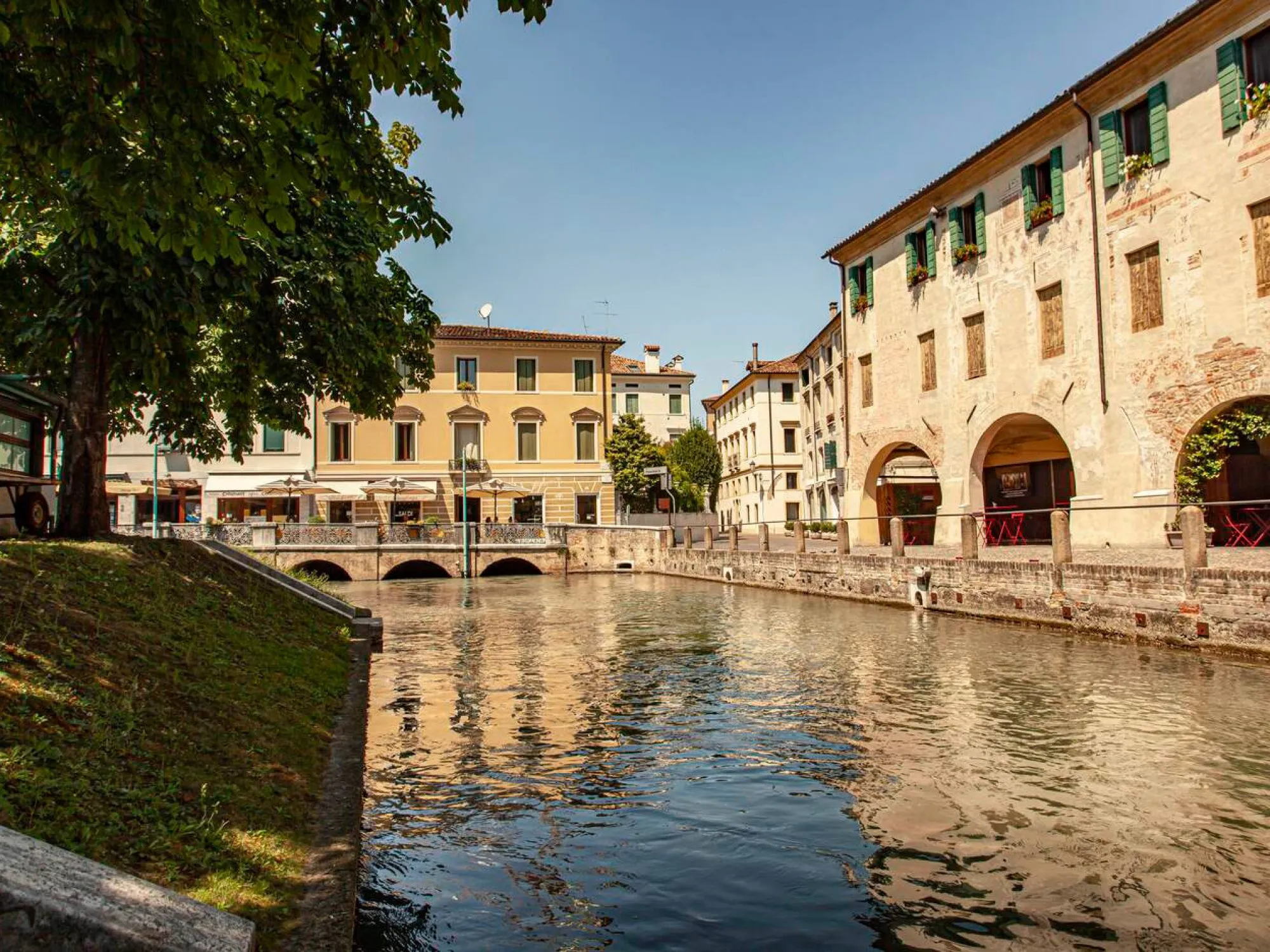
Treviso is crossed by two rivers, the Sile and the Botteniga, and by a network of inner canals that make the old town one of a kind. The most photogenic stretch is around the Isola della Pescheria: a small island in the middle of the canal where every morning, from Tuesday to Saturday, the fish market takes place. In the afternoon the market is closed, but the atmosphere remains.
From here you can walk along the banks of the Cagnan, the main canal, towards Porta San Tomaso or the Mulino delle Acque. It is a quiet walk, often taken by locals in the late afternoon, away from the more common tourist routes.
Aperitivo in Treviso is serious business. The spritz tradition was born here, in the Veneto, and in the city it is still served with Campari or Aperol, alongside cicchetti, small counter snacks that amount to a full meal. The most popular spots are between Piazza dei Signori, via Calmaggiore and the streets around Porta Altinia.
Museums, frescoes and the city walls
The Museo Civico Luigi Bailo, after extensive restoration, now houses the city’s art collection in a modern and coherent layout: from prehistory through to the twentieth century, with a section dedicated to medieval and Renaissance painting from the Treviso area. The ticket often includes the complex of Santa Caterina dei Servi di Maria, a deconsecrated church that holds a cycle of frescoes by Tomaso da Modena among the most important of fourteenth century Italy.
The church of San Nicolò is the largest in Treviso and holds frescoes by the same Tomaso da Modena in the chapter house of the adjoining convent. It is worth a visit for the scale of the space alone, and for the quality of the frescoes on the columns of the nave. Next to the church stands the Seminario Vescovile, with a quiet and well preserved cloister.
The sixteenth century walls of Treviso are among the best preserved in the Veneto. The perimeter is almost entirely walkable, on foot or by bicycle, and offers a different perspective on the city: from the outside, with the bastions and moats still visible. The stretch between Porta Santi Quaranta and Porta San Tomaso is particularly striking and often overlooked by visitors. In the late afternoon, the park around the walls is the right place for a walk before dinner, a green space that locals use every day, with the Sile in the background.
Practical tips for the weekend
Treviso is reachable by train from Venice in about 30 minutes on the Venice Udine line. Treviso Antonio Canova Airport is about 6 minutes by car from the centre and serves numerous European destinations. From Milan, the direct train takes around 2 hours.
The old town is entirely walkable. For the walls and the surrounding area, a bicycle is ideal: several bike rental shops are available in the city. Cars can be parked in the lots outside the walls.
Treviso is worth visiting all year round. Spring and autumn offer the best conditions: mild temperatures, fewer visitors than in summer, and the right light for the canals and alleyways of the old town. In winter the city is quiet and authentic, with fog sometimes rising from the Sile in the morning.
Where to stay in Treviso for a weekend
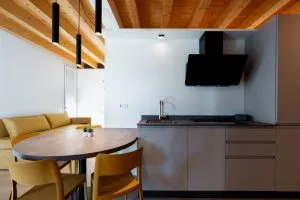
For a weekend in the old town, location is everything. Ca’ Fe, the Treviso Residence property in the heart of the city, is in Vicolo Bianchetti 14: steps away from Calmaggiore, the Cathedral and the canals. The apartments include breakfast at Pasticceria Nascimben, the same one since 1865, two hundred metres from the property, which makes the morning part of the stay, not just a routine.
For those who prefer a longer stay or a quiet base outside the centre, Treviso Residence also runs Ca’ Toni and Ca’ Sette, two properties designed for medium and long term stays with fully equipped apartments.


 Back to top